stories
Sun 3.7.21
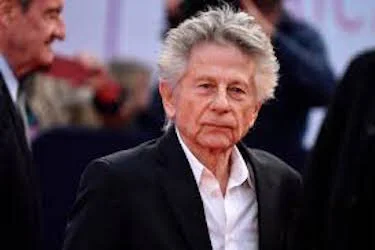
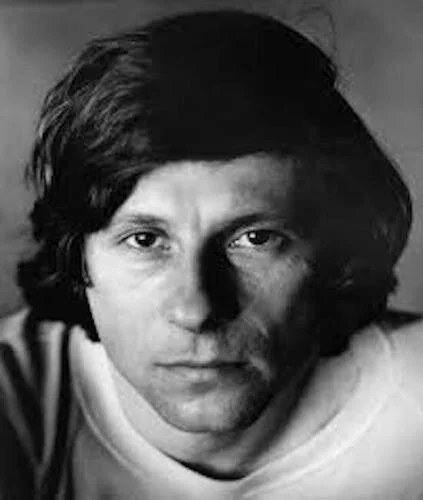
I’ve been viewing Roman Polanski’s early short films from 1957 to 1062, made when he was a film student at a prestigious school in Poland. From the beginning, he’s got that spark of creativity and the themes of his modern movies are all there. The first one entitled, Murder, is just that. A man sleeping blissfully in bed, the door handle moves, someone enters, opens a razor, walks over to sleeping beauty and plunges the razor in his heart, while covering his mouth. The camera recedes and exposes the sleeper in the same lounging, arm outstretched position, but with blood running down the arm. A lot of the films are Chaplinesque. My favorite, made in France and entitled The Fat and The Lean, depicts a fat man sitting outdoors in an easy chair; he is waited on by a wisp of a boy, Polanski himself. The boy literary serves him hand and foot, cooks his meal, runs out with a table for the man, ties a napkin round his neck, then shoves a cigar in his mouth after the meal is over, gets him a big pail of water to soak his feet, manicures his nails, performs ballet dances to entertain him – ah life!
I have a theory about human consciousness. When I worked emergency services listening to people’s stories about their hardships, it became apparent to me that a person’s life is a metaphor representing something true and real. One is trying to come to terms with something impossible to grasp, and so one tangles with it throughout one’s life. It is reflected in the partners one chooses, the work one performs, one’s ethics. Over and over this theme is repeated in one’s life.
Since we cannot grasp this unnamable truth, we make up stories. Anything a human being says cannot be true; we are incapable of knowing the truth, much less naming it. It’s the story we tell ourselves about life, the story we use to explain the concept of School for instance, or Police, Government, Science, God, Earth, the Universe. Together we may come to some consensus about what these concepts involve, i.e. the story we feel most comfortable with.
So Roman was making movies about witchcraft, the occult, murder and mayhem from the beginning, what does that mean? Life dealt this man some harsh blows. His mother died in Auschwitz, at six, he was essentially on his own running from the Nazis, he was almost killed by a serial killer, and then in Hollywood the murder of his wife, unborn child and a group of his friends. The stories he has told himself, and us, to explain these events are in his movies, Chinatown, Rosemary’s Baby, The Ninth Gate, Oliver Twist, Tess, The Pianist, The Tenant.
I’ve started a story. At first I thought this was going to be something short and commercial; but no, that’s not what the story is about. It’s much longer, and more serious, feels like a memoir. Reading Ted Kennedy’s much lauded memoir, True Compass, is what made me realize that. I like his book; it has many interesting stories about his family, the senate, the presidents he worked with. As I read along I began to feel something was missing. Ted had a reputation as womanizer. I’m not talking about trashy expose stuff, but surely this made up an important part of his life view. There’s not a whiff of it in the book.
I can understand his wanting to present himself as he did. He is not an artist, but a politician, and the stories we care to believe about government leaders are of mundane, conservative family men and women. All are expected to fill that role, and woe befalls anyone who veers from the path.
For me, the more complex the story, the more likely one is able to better reflect that unknowable mystery that is at the heart of one’s life.
The favorite essay this past month has been Lone Wolf